Patrons and President
Patron
HRH The former Duchess of Cornwall
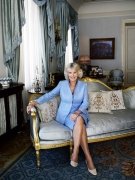 In August 2007 HRH The former Duchess of Cornwall became War Memorials Trust Patron. She took on the role from The Countess Mountbatten of Burma CBE CL JP DL. The role of Patron is an honorary position and the Trust is delighted that HRH has given her support to the charity.
Vice-Patrons
England
Roger Bardell
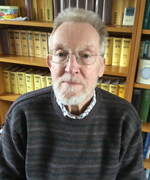 Roger Bardell's involvement with War Memorials Trust began in 2003 when he became Treasurer and subsequently a Trustee of the charity. Having spent his working life in banking, on retirement war memorials were an area he got involved with.
Mr Bardell stepped down as a Trustee in December 2018 following the end of the commemorations of the centenary of World War I. In recognition of his service, particularly guiding the charity through periods of financial change, he was invited to become a Vice Patron.
On starting the role in 2019, Roger said, “I shall be delighted and honoured to represent the charity in the role of Vice Patron. I look forward to catching up with some familiar faces at the AGM and other events in the years ahead as the charity manages its post-centenary challenges.”
Sara Jones CBE
Sara Jones became involved with War Memorials Trust in May 2002, twenty years on from the Falklands War in which she lost her husband Lieutenant Colonel Herbert ‘H’ Jones VC, OBE, 2nd Bn, The Parachute Regiment. She is now involved in a number of organisations and charities many of which have a military connection. She is a Commissioner of the Commonwealth War Graves Commission, Chairman of the Falkland Families Association, Trustee of Falkland Island Memorial Chapel Pangbourne, President of the Royal British Legion Poppy Factory and Hampshire RBL Women’s Section. In addition she is involved with St John Ambulance, is a Deputy Lieutenant for Wiltshire and acts as a Magistrate for South East Wiltshire.
Speaking of her role with War Memorials Trust, Mrs Jones said: “Having lost my husband during the Falklands in 1982 I know only too well the importance of war memorials, and I treasure the places where he is remembered. I know how I would feel if I thought that, sometime in the future, a memorial bearing my husband’s name was found in a poor condition, or worse thrown on a dump damaged and forgotten. I believe that the Trust’s work is vitally important to preserve this part of our nation’s history.”
Wales
Thomas Lloyd OBE, DL, FSA
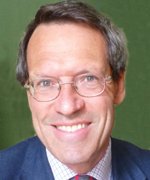 Thomas Lloyd (born 1955) lives in Carmarthenshire in south west Wales, a part of the world that has always been the land of his fathers (and indeed most of his mothers). Having read classics and law at Cambridge, he became, like so many of his countrymen, a solicitor in London. But after a decade or so dealing with other people’s problems, his love of Wales called him back, where he has devoted himself to his real interests in heritage, historic buildings and the arts. He has, at various times since, been Chair of the Historic Buildings Council for Wales, a Member of the Wales Tourist Board, Chair of a large Preservation Trust which restored historic buildings at risk, a Board Member of the Architectural Heritage Fund, Sotheby’s Fine Art Consultant in Wales and co-author of the two south west Wales volumes of the Pevsner series of the Buildings of Britain. He is currently a Royal Commissioner of the Ancient and Historic Monuments of Wales, Chair of the Cathedrals and Churches Commission of the Representative Body of the Church in Wales and the Wales Herald of Arms Extraordinary.
His paternal ancestors were however very much military men, officers in the former South Wales Borderers for the last three generations. His grandfather and father were both awarded MCs (and both severely wounded) in the First and Second World Wars, and his uncle was killed as a Spitfire pilot officer defending Malta. Other family members fought and died in the Boer War and First War. Another survived a close encounter in Zululand.
This family history together with his own professional interests in the built heritage of Wales and its preservation, means that the work of War Memorials Trust is naturally very close to his heart. He therefore considers it a great honour to be asked to serve as an Honorary Vice-Patron for Wales and will do all he can to see that these memorials are duly respected and kept in exemplary repair.
Simon Weston CBE
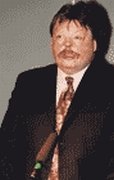 Simon Weston joined the Welsh Guards in 1978 at the age of 16 and served in Berlin, Northern Ireland, Kenya and the Falklands. He was serving in the Falklands War when the ship on which his regiment was travelling, the Sir Galahad, was bombed. 48 men died and Guardsman Weston suffered 46% burns. Since then Simon Weston has become a well known personality on radio and television and is heavily involved in charity work including Weston Spirit. He also speaks for soldiers and veterans, ensuring that concerns about military equipment and support for veterans are brought to the ears of politicians. He was a member of David Cameron’s commission to examine the “Military Covenant”. Simon Weston has published several autobiographies as well as fiction books and has been the subject of a number of television documentaries. He received the OBE for his charitable work in 1992. In 2002 he became involved with War Memorials Trust and is an Area Vice Patron in Wales.
Scotland
Rear Admiral Roger Lockwood
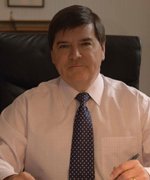 Rear Admiral Roger Lockwood joined the charity as an Area Vice –Patron for Scotland in 2006. Based in Edinburgh, he is the Chief Executive of the Northern Lighthouse Board, responsible for the lighthouses, buoys and beacons in Scottish and Manx waters.
Prior to lighthouses, Roger enjoyed a 34 year career in the Royal Navy, finally retiring in April 2005. Serving at sea in ships ranging from a minesweeper to the aircraft carrier Ark Royal, he also spent a significant part of his career ashore involved in logistics, personnel, training and higher defence policy. His final appointment was as the Senior Directing Staff (Navy) at the Royal College of Defence Studies in London.
Roger lives in Dunblane with his wife, Susie, and five children. He is a Commissioner of the Queen Victoria School, Dunblane, the Chairman of the Perth Sea Cadet Unit and a High Constable of the Port of Leith. He was awarded the CB in the Birthday Honours List 2005.
Northern Ireland
The Lord Rogan of Lower Iveagh
The Lord Rogan of Lower Iveagh became involved with War Memorials Trust in 2014 but has a long-standing personal interest in the Armed Forces and defence matters.
Lord Rogan is currently the Honorary Colonel of 40 (Ulster) Signals Regiment, a Trustee of the Royal Ulster Rifles museum and a Patron of the Somme Association which seeks to perpetuate the memory of Irish soldiers and those who served in Irish Regiments during the Great War.
Dennis lives in Belfast, Northern Ireland, and is married to Lorna with two sons and six grandchildren. He sits in the House of Lords as a member of the Ulster Unionist grouping and is a former Chairman and President of the party.
President
Rt. Hon. Lord Cope of Berkeley
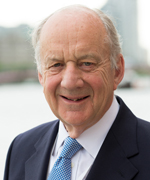 John Cope has been a Regional Volunteer of the Friends of War Memorials, now War Memorials Trust, since its early days in the 1990's. He was also on the Advisory Committee until he became a Trustee when the charity was reorganised in 1999. Having stepped down as a Trustee in June 2017 he was appointed to the position of President in September 2017.
Lord Cope is a Chartered Accountant and was an MP from 1974 to 1997, first representing South Gloucestershire and later Northavon. He was a Whip and a Minister throughout Margaret Thatcher's government and also held office under John Major until 1994. His positions included Minister of State Northern Ireland and Paymaster General. He is a Privy Counsellor and was appointed to the House of Lords in 1997. He was Opposition Chief Whip in the House of Lords from 2001 to 2007. He served in the Royal Artillery during National Service and in the TA.
Speaking of his role with War Memorials Trust when a Trustee, Lord Cope said: "All Trustees have a responsibility to ensure the charity runs properly. I also help make sure the Trust is recognised as the only charity devoted to the preservation of all our war memorials. A nation which forgets its past and those who gave their lives for it, cannot face the future with confidence and spirit. Our war memorials were put up to remember brave men and women who risked and lost all so that we might live in freedom. They were our people and deserve to be remembered with pride by their families and by their nation."